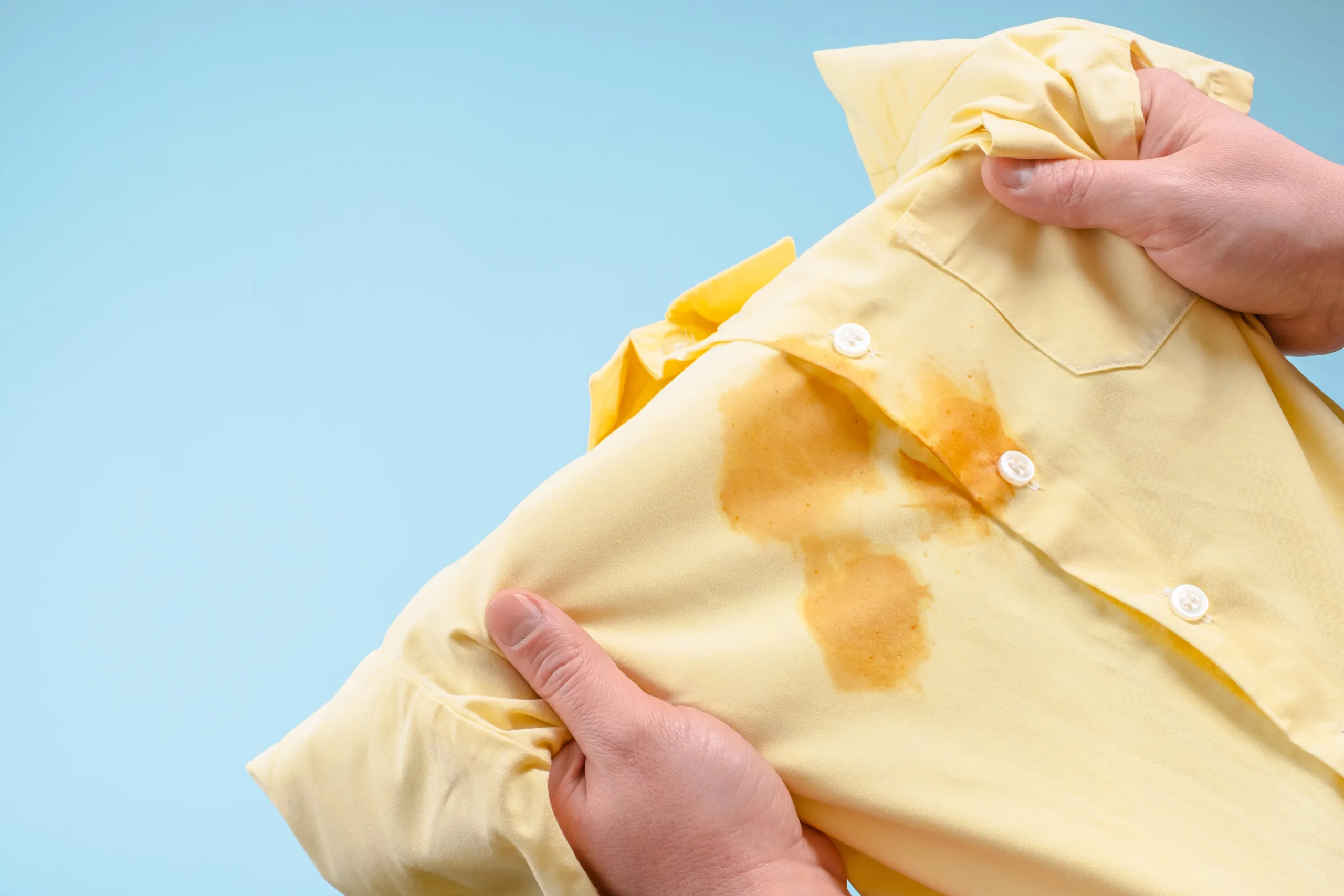
Standard dry cleaning removes oil and grease effortlessly, but it fails completely on water-based stains like sweat, coffee, or wine. The process uses liquid solvents instead of water. These chemicals dissolve fats without swelling fabric fibers. If a cleaner tosses a sweat-stained shirt straight into a dry cleaning drum, the liquid simply washes over the salt and protein. The subsequent heat pressing then bakes the mark permanently into the threads. Getting tough stains out requires a professional to identify the chemical makeup of the spill and apply targeted pre-treatments before the garment ever touches a machine.
You have to look at stains through a chemical lens. A grease mark from a shawarma or a drop of motor oil consists of lipids. Dry cleaning fluid is built specifically to break down lipids. It dissolves the grease and flushes it away cleanly. Water-based stains operate differently. Coffee, tea, fruit juice, and sweat contain tannins, proteins, and sugars. Chemical solvents ignore these elements. A pure dry cleaning cycle will remove a salad dressing stain perfectly but leave the armpit sweat completely untouched.
The real damage happens when untreated stains go through the full finishing process. People wear a silk dress to an outdoor event, spill a sugary drink, and immediately drop it off at a discount cleaner. The staff tags it and throws it in the drum. The stain survives the wash. Then the pressing machine hits the fabric with intense steam and heat. This fuses the residual sugar and protein directly to the yarn. The stain becomes nearly impossible to lift after that point.
This makes the pre-spotting phase the only part of garment care that actually resolves tough stains. A skilled technician looks at a mark and decides which chemical agent will break it down safely.
- Blood and sweat require enzymatic cleaners to digest the proteins.
- Ink from a leaking pen needs a specific volatile solvent to lift the pigment without bleaching the underlying dye.
- Rust marks from a metal hanger require acidic treatments.
The technician applies these solutions by hand using localized steam and a specialized vacuum board to pull the stain through the fabric. Only after this manual work is complete does the garment go into the main machine.
Customers usually make the situation worse before the garment even reaches the counter. The immediate reaction to a spill is grabbing a napkin, dipping it in water, and scrubbing the spot vigorously. Scrubbing pushes the pigment deeper into the yarn and causes localized color loss. The friction easily breaks delicate fibers like silk or lightweight wool, leaving a fuzzy patch that a tailor cannot repair. Applying household stain removers to dry-clean-only fabrics alters the pH balance of the dye. By the time the professional sees the garment, the original spill is often the least of the problems because the fabric is already chemically compromised.
You get much better results when you communicate clearly. Handing over a bag of clothes and walking away leaves the staff guessing. Point out every specific stain and tell them exactly what caused it. A coffee stain requires a different approach than a splash of dark soda, even though they look identical on dark wool. Removing difficult marks is a precise chemical process. If you have a stained garment, stop experimenting with home remedies and bring it to a specialized facility. Diva Laundry employs trained technicians who evaluate every stain manually to safely restore your wardrobe.
FAQs
Not always. Standard dry cleaning may not remove water-based sweat odors without proper treatment.
Dry cleaning solvents remove oils and grease but may not break down sweat proteins, salts, and bacteria.
Inform the cleaner about sweat areas like underarms and collars before cleaning.
Pre-treatment uses special solutions to target sweat, stains, and odor-causing bacteria before cleaning.
Yes. Wet cleaning uses water and specialized detergents to remove sweat-related buildup.
Yes. High heat can set remaining odors deeper into fabric fibers.
Fabrics like wool, silk, and other delicate materials can trap odors if not treated properly.
Yes, professional treatments like specialized cleaning or odor-neutralizing methods can help.
Luxury fabrics need proper odor treatment and handling to avoid damage.
Clean garments regularly and mention sweat exposure when sending them for professional care.